

IPPCAAS Successfully Develops Scarab Repellent Based on Core-Shell Micro/Nanofiber Membranes
Recently, the Innovation Team for Monitoring and Control of Economic Crop Pests of IPP-CAAS published an online research paper entitled “Integrated UV-protective, water-resistant, and biodegradable core-shell micro/nanofiber mats enabling controlled repellent delivery for sustained pest management” in Chemical Engineering Journal (IF=13.2). This study developed a sustained-release carrier based on core-shell micro/nanofiber membranes loaded with repellent against Holotrichia oblita. When combined with agricultural plastic film, it forms an integrated scarab management technology featuring both physical barrier and chemical repellency, providing a novel, highly effective, eco-friendly and sustainable solution for green control of agricultural insect pests.
Holotrichia oblita is a typical underground pest characterized by a concealed life cycle and strong stress resistance. In recent years, its damage has become increasingly severe due to multiple factors such as adjustments in farming systems and climate warming. At present, developing behavioral regulators targeting adults has become one of the efficient and safe control strategies. Core-shell micro/nanofiber membranes prepared via coaxial electrospinning can effectively encapsulate such regulators and exhibit promising application potential. However, existing micro/nanofibers still suffer from drawbacks including weak UV resistance and insufficient hydrophobicity, which severely limit their effective service life in the field. Therefore, it is urgent to optimize stress resistance and upgrade current fiber systems at the material and technical levels.
In this study, an efficient repellent formulation composed of plant-derived 2-ethyl-1-hexanol and 1,8-cineole was developed against adults of Holotrichia oblita. The repellent was then mixed with polyethylene oxide (PEO) and encapsulated in the core layer of micro/nanofibers using coaxial electrospinning. The fiber shell layer adopted biodegradable and highly hydrophobic polylactic acid (PLA) and polycaprolactone (PCL) as base materials, doped with 1% UV absorber UV-327. Components in the core-shell spinning solution exhibited excellent chemical compatibility and outstanding spinnability. The encapsulation efficiencies of 2-ethyl-1-hexanol and 1,8-cineole in the repellent fiber membrane reached 75.10% and 67.17%, respectively, effectively alleviating the initial burst release of the repellent. Laboratory behavioral assays showed that the repellent fiber membrane maintained repellent activity against both male and female adults for at least 60 days. In addition, the repellent fiber membrane displayed excellent performance in UV resistance, hydrophobicity, mechanical properties and natural biodegradability.
When applied in the field by combining the repellent fiber membrane with agricultural plastic film, a green control technology integrating barrier and repellent functions was achieved, enabling highly effective management of Holotrichia oblita. The multi-functional repellent fiber membrane prepared in this study offers an elegant alternative to traditional carriers and helps enrich the green input elements for agricultural production.
Dr. Li Ertao, postdoctoral fellow at IPP-CAAS, is the first author of the paper, and Prof. Yin Jiao is the corresponding author. Prof. Cao Lidong and Prof. Li Kebin provided important guidance in experimental design. Ph.D. candidates Cui Chenglong, Shangguan Wenjie, Qu Yafei and Wang Zhimin participated in the related work. This research was supported by the National Key R&D Program of China (No. 2023YFD1400700) and the National Natural Science Foundation of China (No. 32272542).
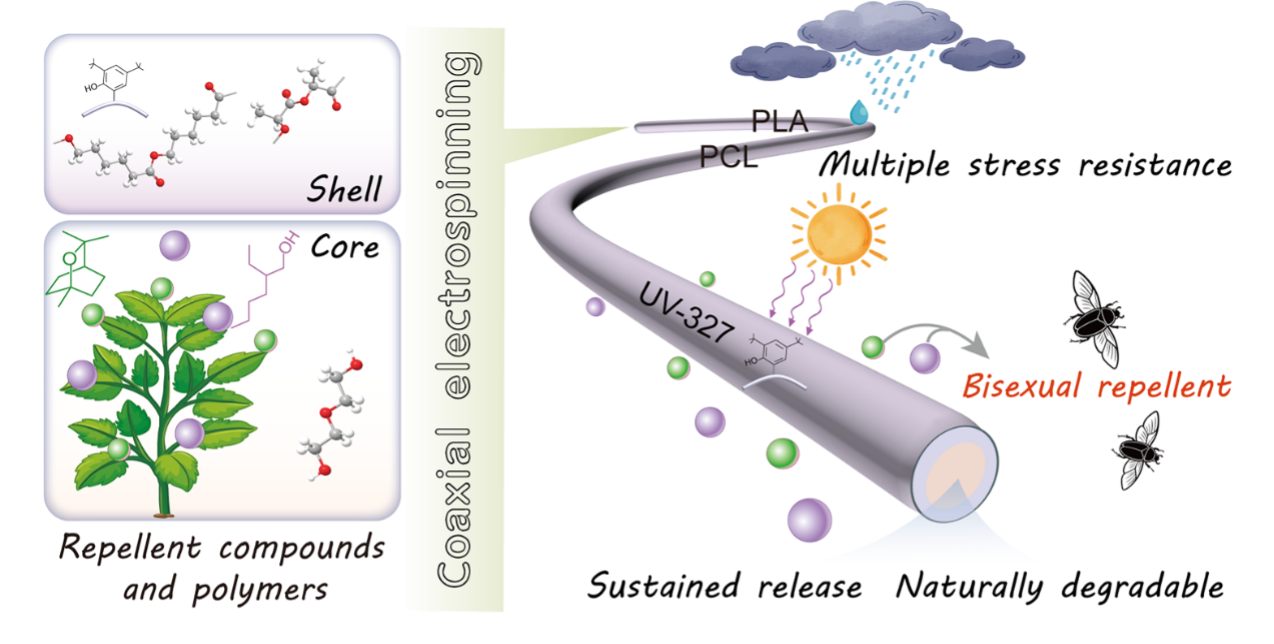
Link:https://www.sciencedirect.com/science/article/pii/S138589472601123X
-
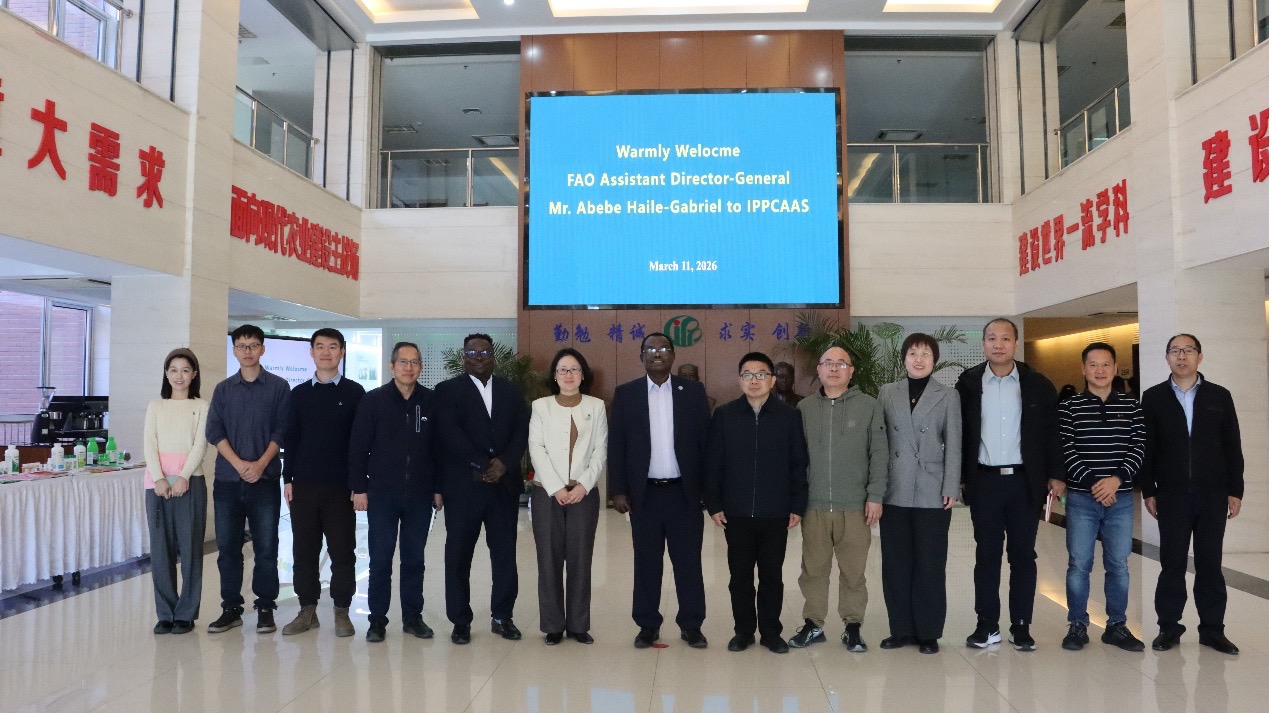 Assistant Director-General of the UN Food and Agriculture Organization Leads Delegation to Visit IPPCAAS
 -
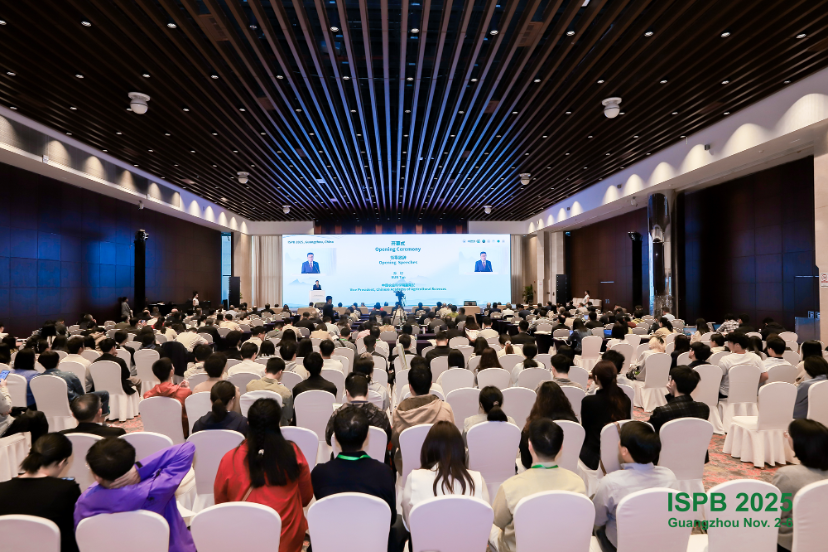 International Symposium on Plant Biosafety (ISPB 2025) Convenes in Guangzhou — Science-led plant health governance to secure food systems and advance the SDGs
 -
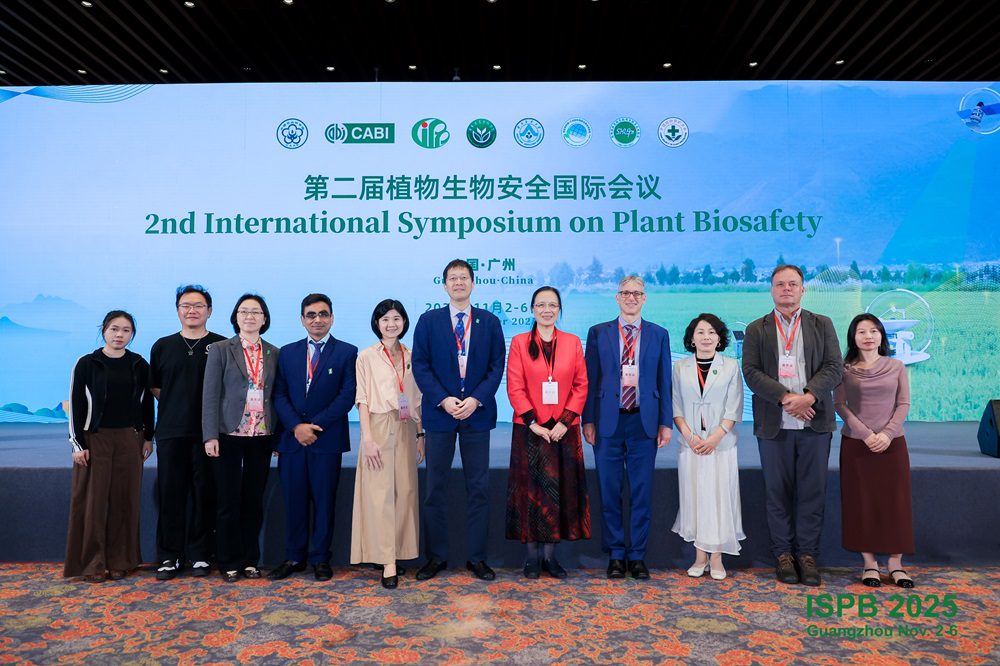 Three decades of China's membership of CABI celebrated at 2nd International Symposium on Plant Biosafety
 -
 CABI receives recognition from FAO for its work to support sustainable plant production and protection